Data Localization and AI Strategies in Turkey:

From Data Borders to Building Digital Sovereignty
When examining the technology policies over the last decade, it becomes evident that data is defined not merely as an economic input, but as an indispensable element of national sovereignty. The traditional bureaucratic mind views borders not only as physical territory and airspace; it considers "data borders" as a direct extension of this sovereign domain.
For global tech giants like Anthropic, Amazon (AWS), Google, and Microsoft, the market presents a massive opportunity. However, due to "data localization" requirements, it also acts as a severe operational labyrinth.
This article analyzes why these barriers are built not from a software developer's perspective, but through a bureaucratic logic rooted in the state's raison d'être, and how these barriers can be navigated through "Algorithmic Diplomacy".
States are less interested in how perfect your technology is, and more concerned with how controllable the data is and ensuring the value-added generated from this data remains within the country's borders. For the "Public Policy" or "Government Affairs" teams of global companies, the critical success factor is not convincing the government of your tech's power; it is proving how that technology will make data more secure and serve their vision.
In this context, data localization must cease to be viewed merely as a cost item and be reframed as a strategic tool for market entry and competitive advantage over rivals.
---
Why Do Governments Build Data Barriers?
To understand a state's insistence on data localization, one must look at the issue from the perspective of legal auditability and national security rather than technological efficiency. In the bureaucratic mindset, if data resides on a server abroad, there is a risk of effectively losing jurisdiction over that data. This is not just a privacy issue; it is perceived as the delegation of the state's power to protect and control its own citizens.
Jurisdiction and the Necessity of Judicial Oversight
Regulatory bodies—such as the Turkish KVKK (Personal Data Protection Authority), BDDK (Banking Regulation and Supervision Agency), and BTK (Information and Communication Technologies Authority)—aim to ensure that data physically remains within Turkey so that Turkish courts and auditing mechanisms can intervene directly in the event of a dispute. When data crosses borders, the sluggishness of mutual legal assistance treaties and the extraterritorial reach of foreign governments (like the Cloud Act in the US) weaken the Turkish state's sovereignty over its own data.
For the bureaucracy, the "cloud" is an abstract concept; what is real is the "soil" that cloud is anchored to.
Localization of Economic Value Added
Data is widely regarded as the "new oil" of the digital economy. The state views the free outflow of raw data abroad, only to be sold back at high prices as processed, value-added AI services, as a form of "digital raw material export". The National Artificial Intelligence Strategy (2021-2025) of Türkiye considers processing data within Turkey's borders as a prerequisite for growing the local data center ecosystem and supporting an AI-specialized workforce.
Economic Target Parameters (2025 Goal):
- AI's Contribution to GDP: 5%
- Employment in the AI Sector: 50,000 People
- AI Employment in Public Institutions: 1,000 People
- Postgraduate Alumni in AI: 10,000 People
The targets above clarify why the state views data localization as an industrial policy. If the data stays inside, the servers that process it, the engineers who manage those servers, and the data scientists who train the models will also stay inside.
---
Evolution of Legislation: Article 9 of KVKK and the 2024 Reform
Turkey's data transfer regime underwent a radical transformation with the KVKK amendment in 2024. While "explicit consent" was previously almost the sole and most difficult path, the new regulation bases data transfer on structural and institutional safeguards. This is a clear indication that the state does not want to "completely lock up the data," but rather "let the data flow through auditable channels."
New Mechanisms in Data Transfer
With the new regulation, three main compliance paths have been defined for global technology companies. These paths serve as strategic roadmaps for companies that want to remain "Compliant":
- Adequacy Decision: The Personal Data Protection Board declaring the destination country or sector safe. In this case, no separate permission is needed. When making an adequacy decision, the Board considers the data protection legislation and international agreements of that country.
- Standard Contractual Clauses (SCCs): The signing of standard contract templates published by the Board. This method has become the most common form of transfer post-2024. However, the critical detail is this: Notification to the Board is mandatory within 5 business days after the contract is signed. Failure to notify results in severe administrative fines.
- Binding Corporate Rules (BCRs): Data protection rules applied internally by a group of companies engaged in joint economic activity. This method is designed more for multinational companies to manage data flows among their own subsidiaries and is subject to Board approval.
Sectoral Red Lines: Finance and Public Data
While the KVKK outlines a general framework, the state's "localization" reflex is much stricter in certain sectors.
- The Banking Regulation and Supervision Agency (BDDK) requires that banks' primary and secondary systems—meaning their entire database infrastructure—must be located domestically. If a global cloud provider wants to serve banks in Turkey, it must offer "local cloud" or "sovereign cloud" models running on physical servers within Turkey's borders, rather than a "public cloud" model.
- The Information and Communication Security Guide prepared by the Digital Transformation Office of the Presidency (DDO) strictly restricts the exit of public data abroad. This 659-article guide mandates that all organizations providing critical infrastructure services keep their data in secure, local regions.
---
AI Models and the Local Data Paradox
The biggest technical challenge for companies like Anthropic or Google is the inability to move the massive datasets needed to train Large Language Models (LLMs) outside of Turkey. The success of Turkish language models depends on Turkey's cultural and local data. However, regulatory barriers prevent this data from being transferred to global data centers.
Case Study: Trendyol LLM and the National Model Vision
The most concrete example of how local data can be turned into an advantage in Turkey is the Trendyol LLM project. Built on an architecture based on LLaMA2 or Mistral, this model was trained with 10 billion Turkish and English tokens.
Trendyol LLM v1.0 Details:
- Base Architecture: Mistral 7B / LLaMA2
- Training Data: 10 Billion Tokens (Bilingual)
- Training Methodology: LoRA (Low-Rank Adaptation)
- Fine-Tuning: RLHF and DPO
The success of such models sends this message to global giants: "If you can't take the data out, bring your model to where the data is (Turkey)." The low latency and successful handling of cultural context context that Trendyol achieves with local data creates a competitive necessity for global companies.
---
Solutions for Companies: Algorithmic Diplomacy and Compliance Strategies
Public Policy teams of giants like Amazon AWS or Google need strategists who will execute "Algorithmic Diplomacy", not just legal teams, to overcome data barriers in Turkey. The core of this strategy should be the argument: "We understand the state's concerns, and our solution supports this sovereignty."
Sovereign Cloud Models
The European Sovereign Cloud model launched by AWS in Europe is a perfect compliance template for Turkey. In this model, the infrastructure is physically and logically separated from other regions.
- Local Operations: Ensuring that personnel working in the data center are Turkish citizens who have passed security screenings alleviates the state's fears of "espionage" and "data leaks."
- Isolated Infrastructure: Logically isolating the Turkish region from the global network prevents the accidental backup of data abroad.
- Encryption Control: Keeping encryption keys under the control of the state or a local partner gives the bureaucracy the precise feeling that "I am the real owner of the data."
Strategic Partnerships: The Turkcell and Google Cloud Example
The most effective way to overcome regulatory barriers in the Turkish market is to form a strategic partnership with a local giant. The Turkcell and Google Cloud collaboration announced in late 2024 is textbook in this regard. Google announced it would open a "Cloud Region" in Turkey, but entrusted the physical infrastructure and sales operations of this region to Turkcell.
- Google Cloud Investment: $2 Billion over 10 Years
- Turkcell Infrastructure Investment: $1 Billion until 2032
- Targeted Economic Contribution: $5 Billion Annually
The striking aspect of this agreement is hidden in the statements of Ali Taha Koç, former CEO of Turkcell (and former President of the DDO): "We are establishing our digital sovereignty on our own soil with a structure that is 100% compliant with our country's regulations". Google demonstrated the most successful example of algorithmic diplomacy here by saying, "I am working with Turkcell so that Turkey's data stays in Turkey," instead of just saying "my technology is great."
Federated Learning: A Political Victory for a Technical Solution
Another way for global AI companies to use local data is to send the algorithms that train the model to local data centers instead of moving the data itself. Federated Learning is custom-built for utilizing Turkey's most sensitive data sets, such as health and finance.
A global pharmaceutical company cannot transfer thousands of MRI images from Turkish hospitals abroad. However, with federated learning, the model is trained on the hospital's own server, and only the weight parameters return to the center.
- Raw Data Privacy: Personal data never leaves the local network.
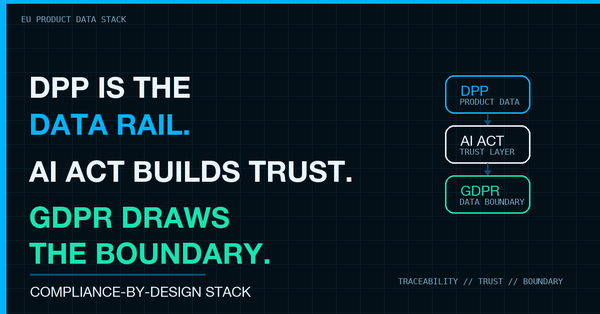
- Regulatory Compliance: It is "compliant by design" with regulations like GDPR and KVKK.
---
National AI Strategy and the "Anadolu AI" Project
Turkey's 2021-2025 strategy reveals not only the prohibitions but also what the state wants to build. Global companies earn the status of a "preferred investor" to the extent they contribute to these goals.
- National Foundation Model (Turkish LLM): Strategic documents emphasize that Turkey must develop a "National Foundation Model" trained on its own cultural data. Projects like "Anadolu AI" and the National Computing Cloud, modeled after New York's Empire AI project, envision the establishment of a local GPU infrastructure.
- Opening Up Public Data (Open Data): The Turkish Open Data Portal aims to make public data available to startups. Global companies can assume the role of a "strategic ally" by providing technology and consulting to the state in anonymizing and securely processing this data.
---
Conclusion and Strategic Recommendations: Executing Algorithmic Diplomacy
For global tech companies like Amazon AWS, Anthropic, or Google, Turkey is a front where "costs are high, but the market is strategic." To overcome data localization barriers and turn this process into an opportunity, the following steps must be taken:
- Technological Humility, Emphasis on Sovereignty: In meetings with public institutions, the focus should be on the security of the data within borders and its contribution to Turkey's digital sovereignty, rather than the speed of the technology. The message "We protect your data even from ourselves" is the only way to gain bureaucratic trust.
- Local Ecosystem Investment: Instead of taking data out, support should be given to the goal of "training 50,000 AI specialists" in Turkey.
- Hybrid and Sovereign Cloud Solutions: For the Turkish market, "Dedicated Region" solutions that are 100% compliant with BDDK and DDO guidelines, where data remains in Turkey, must be prioritized.
- Standard Contract Automation: The 5-working-day notification period in the new KVKK regime is an operational risk. Companies must use legal-tech solutions that automate these notifications.
- Regulatory Arbitrage: Positioning Turkey not just as a market, but as a "digital hub" that will serve surrounding regions (such as the Organization of Turkic States data union infrastructure) will geometrically increase your strategic value in the eyes of the state.
Ultimately, data localization is not a barrier; it is the new rule of the game. Companies that agree to play by this rule and integrate the state's sovereignty concerns into their technological architecture have won the competition from the start. Keeping data within borders and generating global value from it will be the greatest "Algorithmic Diplomacy" triumph of the next decade.
Explore the full interactive data strategy roadmap here: Infographic